Cottage Cheese Portions: What a Serving Actually Looks Like
Quick Answer: A labelled serving is usually half a cup, around 110-120g, giving roughly 12-14g of protein. Most people actually eat a cup or more, which doubles the protein to 24-28g — and also doubles the sodium, which is the number worth watching in this food.
Cottage cheese is genuinely useful, and the label is describing a portion almost nobody uses. Both facts matter when you are counting anything.

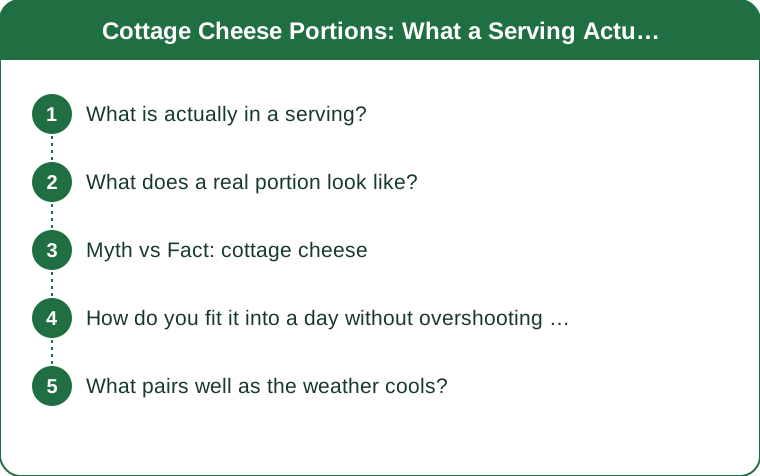
What is actually in a serving?
For a typical low-fat (2%) cottage cheese, the labelled half-cup (about 113g) serving lands near:
- 12-14g protein
- 80-100 calories
- 4-5g carbohydrate, mostly as lactose
- 2-3g fat
- 300-400mg sodium
The protein-to-calorie ratio is the reason people use it. Very few whole foods deliver that much protein for under 100 calories.
The sodium is the number to know. At 350mg per half cup, a one-cup portion is around 700mg — a substantial share of a typical daily target in a single bowl. Brands vary widely here, from around 300mg to well over 450mg per serving, so it is genuinely worth comparing labels.
Low-sodium versions exist and taste noticeably flatter, which is honest rather than a complaint.
What does a real portion look like?
Most people eat between one cup and one and a half cups. In practical terms:
- Half cup — a modest side, roughly the size of a tennis ball. 12-14g protein.
- One cup — a proper breakfast bowl base. 24-28g protein, 600-800mg sodium.
- One and a half cups — a full meal on its own. 36-42g protein.
A useful reference: a standard 16oz (450g) tub is four labelled servings and, at the rate most people eat it, closer to two.
For a protein target, one cup gets most people to a meaningful per-meal dose in a single ingredient, which is the practical appeal. For a sodium target, one cup is the point where it starts competing with the rest of the day.

Myth vs Fact: cottage cheese
Myth: Full-fat is the healthier choice now. Fact: They are different tools. Full-fat (4%) has more calories and a better texture; low-fat gets you more protein per calorie. Neither is wrong — pick by what the meal needs.
Myth: The lactose makes it unsuitable if you are lactose intolerant. Fact: Cottage cheese contains modest lactose, less than milk but more than aged cheese. Many people with mild intolerance tolerate it, especially in smaller portions. Individual, and worth testing rather than assuming.
Myth: Cottage cheese and Greek yogurt are interchangeable. Fact: Similar protein, very different sodium. Greek yogurt typically has a fraction of the sodium, and cottage cheese typically has more protein per calorie. If sodium is your constraint, that is the deciding factor.
Myth: The liquid means it has gone off. Fact: That is whey separating, which is normal. Stir it back in — it contains protein you would otherwise pour away.
How do you fit it into a day without overshooting sodium?
Three practical approaches:
-
Make it the salt in the meal. If cottage cheese is bringing 700mg, do not also add salted nuts, olives, or a salty seasoning blend. Build around it with fruit, herbs, cucumber, tomato, or unsalted seeds.
-
Split the portion across two meals. Two half-cup servings at breakfast and as an afternoon snack spreads the sodium and the protein, which is better for both.
-
Buy on the label. The range across brands is wide enough that switching brands can save 150mg per serving with no change in how you eat.
And a texture note that matters more than it should: if the graininess is the barrier, blending it smooth with a stick blender changes it completely and takes fifteen seconds. Blended cottage cheese works as a base for savoury bowls, a swap for sour cream, or a sweet breakfast with fruit — and it uses the same tub you already dislike.
What pairs well as the weather cools?
The summer version — cold, with tomato or peach — starts feeling wrong in September. The transitional versions that work:
- Warm, over roasted vegetables. It softens rather than melts, which is a pleasant middle ground. Squash, peppers, and broccoli all work.
- Stirred into a hot grain bowl at the end, off the heat, so it stays creamy instead of splitting.
- Sweet, with cooked fruit. Warm stewed apple or pear with cinnamon over blended cottage cheese is a genuinely good autumn breakfast.
- Folded into scrambled eggs in the last thirty seconds — adds protein and keeps them soft.
One caution: do not boil it. Cottage cheese splits at high heat because the curds are relatively unstable. Add it off the heat or at the very end, and it holds together.
TL;DR:
- A labelled half-cup serving gives 12-14g protein for under 100 calories; a real one-cup portion doubles both protein and sodium.
- Watch sodium, not calories — one cup can hit 700mg, and brands vary from 300 to 450mg per serving.
- Blending it smooth solves the texture objection in fifteen seconds and opens up savoury uses.
- Add it off the heat in warm dishes; it splits if boiled.
The honest summary is that cottage cheese is one of the better protein-per-calorie foods available and one of the saltier ones, and both facts scale with the portion you actually eat rather than the one on the label. Check your brand’s sodium once and the rest takes care of itself.
Keep Reading
This article is for general informational purposes only and is not medical advice. Always consult a qualified health professional for guidance specific to you.