Is Cottage Cheese Actually Good for Blood Sugar Control?
Quick Answer: Yes — cottage cheese has a very low glycemic impact on its own and its protein content helps blunt blood sugar spikes when eaten alongside carbs, making it a genuinely useful tool for stable energy.
With the cottage cheese comeback in full swing, this is one of the more practical reasons it’s earned the hype, not just a texture trend.

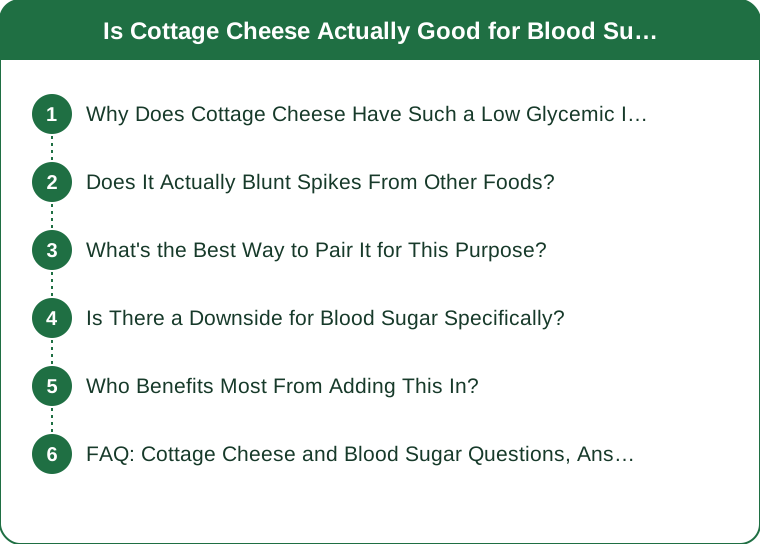
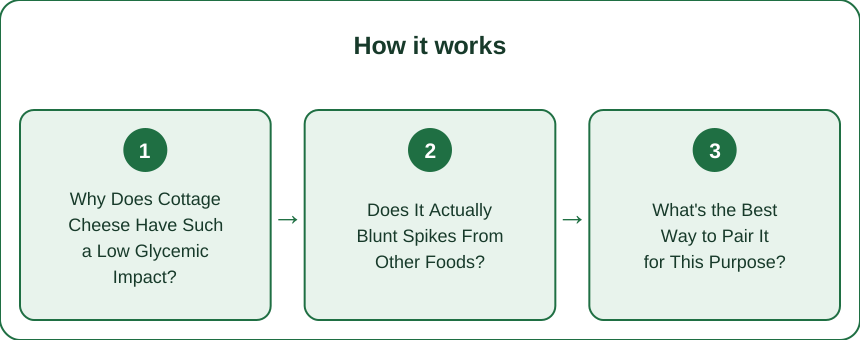
Why Does Cottage Cheese Have Such a Low Glycemic Impact?
Cottage cheese is mostly protein and fat, with very little carbohydrate per serving — a typical half-cup has around 3-4g of carbs, compared to 15-30g in a bowl of cereal or a bagel. Foods low in carbohydrate simply don’t require much insulin response, so blood sugar barely moves after eating it plain.
The casein protein in cottage cheese also digests slowly, which means it doesn’t just avoid spiking blood sugar — it can help keep you satisfied for longer than a faster-digesting protein might.
Does It Actually Blunt Spikes From Other Foods?
This is the more useful application. Pairing a high-carb food with 15-20g of protein has been shown to reduce the resulting blood sugar spike by slowing gastric emptying and stimulating insulin release earlier in the digestion process. A half-cup of cottage cheese provides roughly 12-14g of protein — enough to make a real difference next to fruit, toast, or granola.
Eating the cottage cheese first, or at least alongside the carb rather than after it, tends to produce a better result than eating carbs first and protein as an afterthought.
What’s the Best Way to Pair It for This Purpose?
Berries are a solid pairing — lower glycemic impact than tropical fruit, plus fiber that adds to the blunting effect. If you’re having toast, adding a scoop of cottage cheese on top (savory, with everything-bagel seasoning) does more for blood sugar than butter or jam alone would.
For anyone managing blood sugar more closely, checking the label matters: some flavored or reduced-fat versions add sugar to compensate for lost flavor, which works against the whole point — plain, full or 2% fat versions are the more reliable choice.

Is There a Downside for Blood Sugar Specifically?
Sodium is the more relevant caveat than blood sugar — a typical serving runs 300-450mg of sodium, which isn’t a blood sugar issue directly but matters for anyone also managing blood pressure alongside blood sugar. Low-sodium versions exist and taste close enough for most people not to notice much difference.
Otherwise there’s no meaningful downside for blood sugar control specifically — it’s one of the more genuinely favorable foods in this category, not just a trend that happens to also be fine.
Who Benefits Most From Adding This In?
Anyone dealing with mid-morning energy crashes after a carb-heavy breakfast is a good candidate to test this — swapping a straight bowl of cereal for cereal-plus-cottage-cheese, or cottage cheese with fruit instead of cereal entirely, for two weeks and noticing the difference in how the 10-11am slump feels.
People managing prediabetes or type 2 diabetes often already know protein pairing works, but cottage cheese specifically is a convenient, no-cook option that fits that strategy better than many alternatives.
FAQ: Cottage Cheese and Blood Sugar Questions, Answered
Is cottage cheese better than Greek yogurt for blood sugar?
They’re close — cottage cheese runs slightly lower in carbs and higher in protein per serving in most brands, but plain Greek yogurt is a fine alternative if you prefer the texture.
Does the fat content matter for blood sugar?
Fat itself doesn’t spike blood sugar and can further slow digestion, so full-fat versions aren’t a problem for this purpose specifically — choose based on your overall calorie goals instead.
Can I rely on this instead of medication or medical advice?
No — this is a helpful dietary strategy, not a treatment. Talk to a doctor about blood sugar management specific to your situation. This is general information, not medical advice.
TL;DR:
- Cottage cheese has minimal carbs and a slow-digesting protein that barely moves blood sugar on its own
- Pairing it with carbs (12-14g protein per half-cup) meaningfully blunts the resulting spike
- Plain, full or 2% fat versions are more reliable than flavored ones with added sugar
- Sodium, not blood sugar, is the real thing to watch
It’s one of the rare trendy foods where the health claim actually holds up under a closer look.
Keep Reading
This article is for general informational purposes only and is not medical advice. Always consult a qualified health professional for guidance specific to you.