The Baking Swap Where Cottage Cheese Quietly Beats Eggs
Quick Answer: Blended cottage cheese can replace 1-2 eggs in dense, moist baked goods like protein muffins and pancakes, adding structure and moisture while boosting protein content — it works less well in delicate, airy bakes like sponge cake where eggs provide critical whipped volume.
Cottage cheese in baking usually gets framed as a health-food compromise. In a specific category of recipes, it’s genuinely a better ingredient choice than the egg it’s replacing — not just a lower-calorie stand-in.

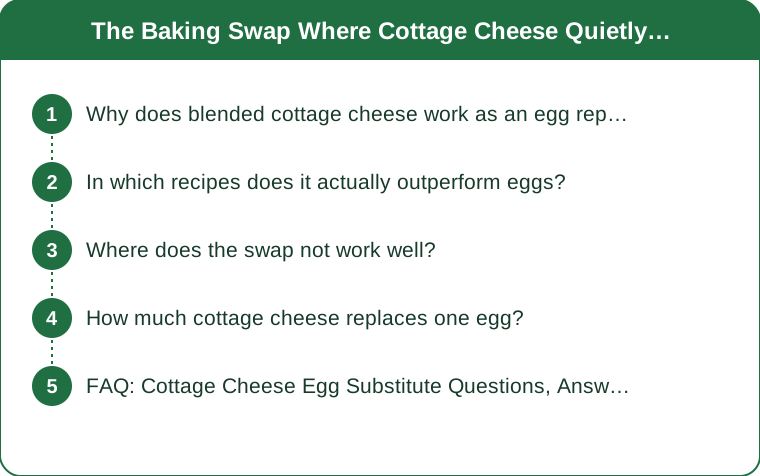
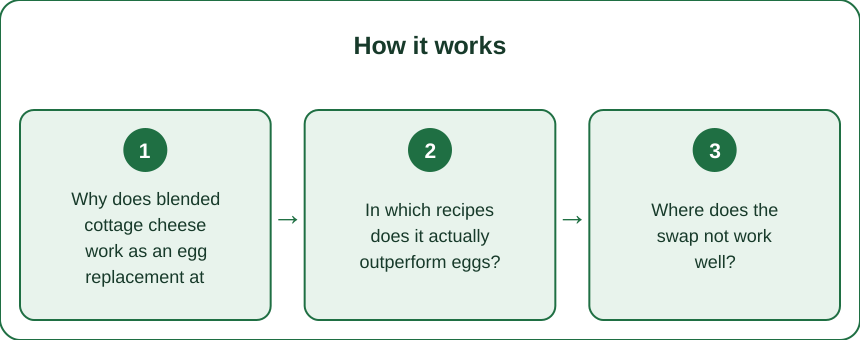
Why does blended cottage cheese work as an egg replacement at all?
Cottage cheese blended completely smooth provides both moisture and a protein-based binding structure similar to what eggs contribute — it’s not a 1:1 chemical match, but in recipes that don’t rely on eggs for aeration (like a whipped sponge), the binding and moisture roles overlap enough to substitute effectively.
In which recipes does it actually outperform eggs?
Dense, moist bakes — protein muffins, banana bread, pancakes, and quick breads — often turn out more moist and tender with blended cottage cheese than with eggs alone, since cottage cheese’s higher moisture content prevents the slight dryness eggs alone can produce in these denser formats. This is a genuine quality improvement, not just a protein-content trade.

Where does the swap not work well?
Sponge cakes, meringues, and anything relying on whipped egg whites for structural rise fail with this substitution — eggs provide mechanical aeration through whipping that cottage cheese, blended or not, cannot replicate. This category of bake needs real eggs, full stop.
How much cottage cheese replaces one egg?
Roughly 1/4 cup of well-blended cottage cheese per egg is a common starting ratio, though this varies by recipe — starting with replacing half the eggs in a recipe (rather than all of them) is the safer first attempt if you’re unsure how a specific recipe will respond.
FAQ: Cottage Cheese Egg Substitute Questions, Answered
Does the cottage cheese need to be blended completely smooth?
Yes — unblended curds create a noticeably different, lumpy texture in the final bake; a blender or food processor until fully smooth is a necessary step, not optional.
Does this substitution change the protein content significantly?
Yes, meaningfully — cottage cheese adds substantial protein per serving compared to eggs alone, which is part of why this swap has become popular in protein-focused baking specifically.
Can I use this swap in recipes that already have eggs, to add extra protein rather than replace them?
Yes — adding a small amount of blended cottage cheese alongside the full egg count, rather than as a full replacement, is a common way to boost protein without changing the recipe’s egg-dependent structure.
TL;DR:
- Blended cottage cheese works as an egg swap in dense, moist bakes (muffins, quick breads, pancakes)
- It often improves moisture and tenderness in these specific recipes, not just protein content
- It doesn’t work in sponge cakes or anything relying on whipped egg structure
- Roughly 1/4 cup blended cottage cheese per egg is a reasonable starting ratio
In the right recipe category, this isn’t a compromise swap — it’s an upgrade.
Keep Reading
This article is for general informational purposes only and is not medical advice. Always consult a qualified health professional for guidance specific to you.