Is Cottage Cheese Actually a Weight-Loss Food, or Just a High-Protein One?
Quick Answer: Cottage cheese isn’t a magic weight-loss food, but its high protein-to-calorie ratio and satiety effect make it a genuinely useful tool within a calorie-appropriate diet — the benefit comes from supporting adherence and fullness, not from any special fat-burning property.
Social media treats cottage cheese like it melts fat on its own. The actual mechanism is much less mysterious — and understanding it helps you use cottage cheese more effectively than the hype suggests.

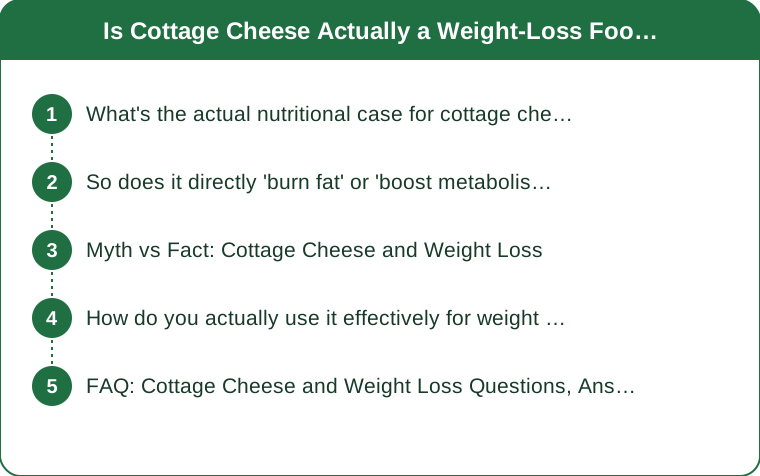
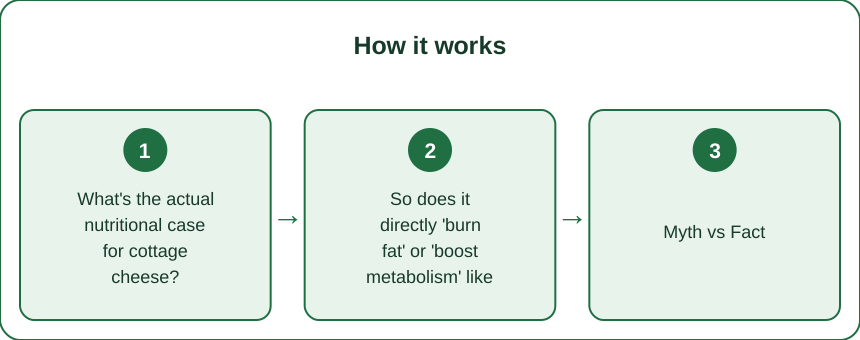
What’s the actual nutritional case for cottage cheese?
A standard serving delivers roughly 12-14 grams of protein for around 90-100 calories — a favorable protein-to-calorie ratio compared to many other common foods, which is the real basis for its popularity in weight-management contexts.
High protein intake is consistently associated with greater satiety (feeling fuller for longer) compared to equivalent calories from fat or carbs, which can help with overall calorie control across a day, indirectly supporting weight loss goals.
So does it directly ‘burn fat’ or ‘boost metabolism’ like some claims suggest?
No — there’s no special fat-burning mechanism specific to cottage cheese; the metabolic cost of digesting protein (thermic effect) is real but modest and applies to protein sources generally, not cottage cheese uniquely.
Its weight-loss relevance comes entirely from displacing lower-protein, more calorie-dense options and supporting fullness within an overall calorie-appropriate diet — not from any unique property of the food itself.

Myth vs Fact: Cottage Cheese and Weight Loss
Myth: Eating cottage cheese at night specifically prevents fat storage. Fact: Total daily calorie and protein intake matters far more than the specific timing of any one food — there’s no meaningful metabolic advantage to eating it specifically at night.
Myth: All cottage cheese has the same nutritional profile. Fact: Full-fat, low-fat, and fat-free versions differ meaningfully in calories and fat content — checking the label matters more than assuming ‘cottage cheese’ means one fixed nutritional profile.
Myth: You need to eat cottage cheese specifically — no other food works the same way. Fact: Greek yogurt, eggs, and other high-protein-to-calorie foods offer a comparable satiety and protein benefit — cottage cheese is one good option among several, not a uniquely necessary one.
How do you actually use it effectively for weight management?
Swap it in for lower-protein, higher-calorie snack options — replacing chips or a pastry with cottage cheese and fruit meaningfully shifts the protein-to-calorie ratio of your snacking, which is where much of its practical benefit shows up.
Pairing it with fiber-rich additions (berries, vegetables) further extends satiety, since fiber and protein together tend to support fullness more than either alone.
FAQ: Cottage Cheese and Weight Loss Questions, Answered
Is cottage cheese better for weight loss than Greek yogurt?
They’re broadly comparable in protein-to-calorie ratio — the better choice often comes down to personal preference and how each fits into your meals rather than one being definitively superior.
Can I eat unlimited cottage cheese and still lose weight?
No — it still contains calories, and total daily intake still matters; cottage cheese supports a calorie-appropriate diet, it doesn’t override the need for one.
Does the fat content of cottage cheese matter for weight loss?
Yes — full-fat versions have meaningfully more calories per serving than low-fat or fat-free versions, which affects how it fits into your overall calorie target.
TL;DR:
- Cottage cheese’s real advantage is its high protein-to-calorie ratio, not a special fat-burning property
- Higher protein intake supports satiety, which helps with overall calorie control
- Full-fat, low-fat, and fat-free versions differ meaningfully — check the label
- Its benefit comes from displacing lower-protein snacks, not from any food-specific magic
It’s a genuinely useful tool within a calorie-appropriate diet, not a shortcut around one.
Keep Reading
This article is for general informational purposes only and is not medical advice. Always consult a qualified health professional for guidance specific to you.