The Cottage Cheese Storage Mistake That's Making It Go Bad Faster Than It Should
Quick Answer: Storing cottage cheese upside down (container flipped) rather than right-side up is a widely shared trick that actually works, because it creates a slight vacuum seal against the lid that limits oxygen exposure — the more common mistake, though, is storing it in the fridge door, where temperature fluctuates more than in the main body of the fridge, speeding up spoilage.
Your cottage cheese seems to go bad noticeably faster than other dairy products in your fridge, and it’s probably not the product — it’s where and how it’s being stored.

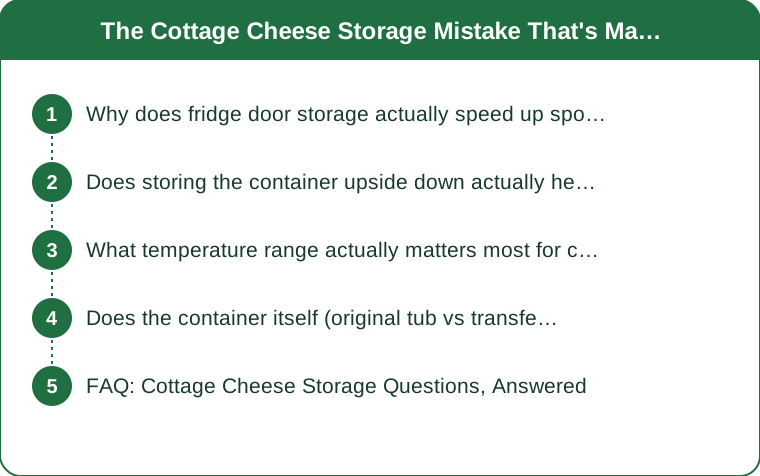
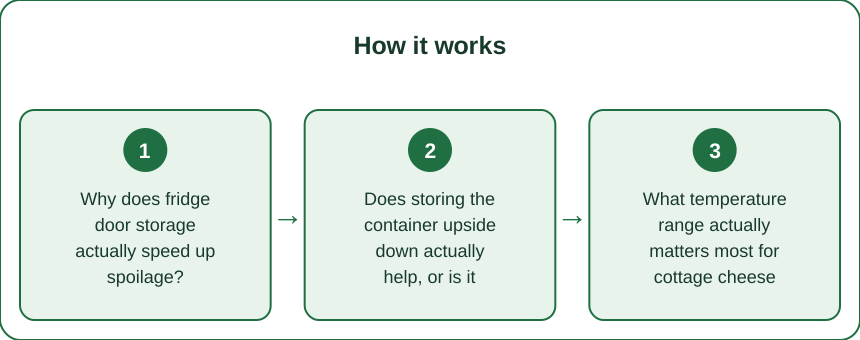
Why does fridge door storage actually speed up spoilage?
The fridge door experiences more temperature fluctuation than the main body of the fridge, since it’s exposed to outside air every time the door opens. Cottage cheese, more sensitive to temperature swings than harder cheeses, spoils meaningfully faster when stored there rather than on a main shelf.
Does storing the container upside down actually help, or is it just a myth?
It’s a widely repeated trick that does have some real basis — flipping the container creates a tighter seal between the product and the lid, reducing the air pocket where bacteria growth and oxidation happen fastest. It’s not a dramatic fix, but it’s a genuine, low-effort improvement.

What temperature range actually matters most for cottage cheese specifically?
Keeping it consistently at or below 40°F (4°C), the safe general refrigeration threshold, matters more for cottage cheese than for firmer cheeses, since its higher moisture content makes it more hospitable to bacterial growth if temperature creeps up even slightly.
Does the container itself (original tub vs transferring to another container) matter?
Keeping cottage cheese in its original, sealed container until you’re ready to use it minimizes air exposure — transferring it to a different container introduces more handling and air contact than necessary, which can shorten how long it stays fresh.
FAQ: Cottage Cheese Storage Questions, Answered
How long does cottage cheese actually last once opened?
Generally about 5-7 days once opened, assuming proper cold storage — checking the specific use-by date alongside this general range is the safest approach.
Is it safe to freeze cottage cheese to extend its life?
It can be frozen, but texture changes noticeably (becoming grainier) upon thawing, making it better suited for cooking or baking after freezing rather than eating plain.
What are the actual signs cottage cheese has gone bad?
A sour smell beyond its normal tang, visible mold, or a notably off texture are the clearest signs — when in doubt with any dairy product, it’s safer to discard it than risk it.
TL;DR:
- Fridge door storage exposes cottage cheese to more temperature fluctuation than main shelves
- Storing the container upside down creates a tighter seal that genuinely helps
- Keeping it consistently below 40°F matters more for cottage cheese than firmer cheeses
- Leave it in its original sealed container until ready to use
A couple of small storage changes can meaningfully extend how long an opened container actually stays fresh.
Keep Reading
This article is for general informational purposes only and is not medical advice. Always consult a qualified health professional for guidance specific to you.