Warm Cottage Cheese Dishes for Cooler Evenings (and Why Heat Changes Everything)
Quick Answer: Cottage cheese splits when heated too fast or too hot, because the curds are held together loosely and the proteins tighten and expel water. Blend it smooth first, add it off direct heat, keep the temperature gentle, and add a little starch or egg to stabilise it - and it becomes a genuinely good base for baked dishes, sauces, and warm bowls with far more protein than cream.
The reason most people only eat it cold is that they tried it hot once, it curdled, and they never tried again.

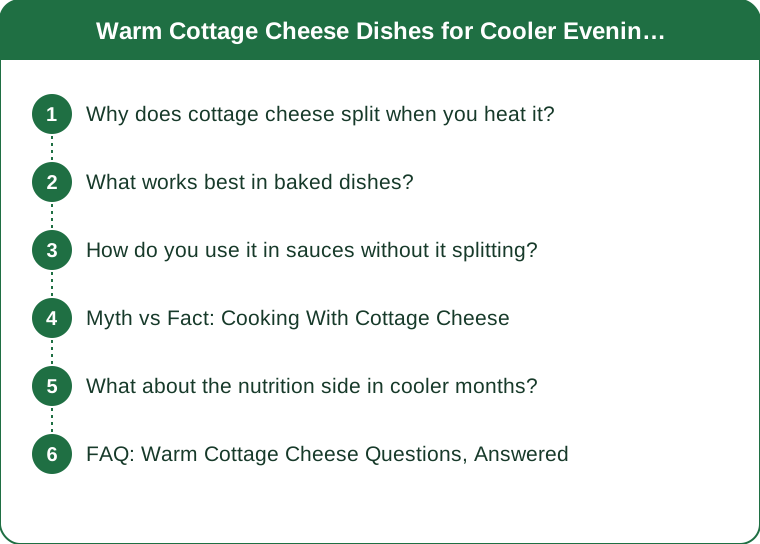
Why does cottage cheese split when you heat it?
Because it is a fresh, high-moisture cheese with proteins that were never designed to hold together under heat.
What is happening. Cottage cheese is made by acidifying milk so the casein proteins coagulate into curds, which are then drained and mixed with a cream or milk dressing. The curds are loosely bound and sit in a lot of liquid. When heated, the proteins contract and squeeze out that water, which is the visible splitting - grainy curds in a watery pool.
Three things make it worse:
- High heat, particularly direct heat on the hob
- Speed. A rapid temperature rise causes the proteins to seize rather than relax
- Additional acid. Lemon juice, wine, or tomato added at the same time as heat compounds the coagulation
What prevents it:
- Blending it smooth first. This is the single most effective step. A smooth purée has no curd structure left to break, and it behaves far more like a thick yoghurt or a ricotta
- Adding starch. A teaspoon of cornflour or a little flour stabilises the proteins substantially
- Adding egg, which sets and holds the mixture in baked dishes
- Gentle heat, and adding it at the end rather than boiling it
- Full-fat rather than low-fat, because fat buffers the proteins. Low-fat and fat-free split most readily
The practical summary: blended, stabilised, gently heated cottage cheese behaves beautifully. Whole-curd cottage cheese dropped into a boiling pan does not.
What works best in baked dishes?
Baking is the most forgiving application, because the heat is indirect and usually there is egg involved.
Baked pasta. Blended cottage cheese substitutes well for ricotta in lasagne and baked pasta, with substantially more protein and less fat. Blend it with an egg and seasoning before layering and it sets rather than weeping. Season generously - cottage cheese is milder than ricotta and needs more salt, pepper, and nutmeg than you think.
Egg bakes and crustless quiches. Blended cottage cheese folded into eggs produces a lighter, creamier set than milk or cream, with more protein. Roughly half a cup per four eggs is a good starting ratio. Excellent for batch cooking and reheats well.
Savoury bakes generally. Stirred into a vegetable gratin, a stuffed pepper filling, or a cottage-cheese-based topping over roasted vegetables.
Pancakes and baked oats. Blended cottage cheese in a pancake or baked oat batter adds protein and produces a soft, moist result. This is one of the most reliable applications and the flavour disappears entirely.
Flatbreads and dough. The two-ingredient dough approach - blended cottage cheese with self-raising flour - produces a workable dough for flatbreads and bases. Higher protein than a standard dough and quick.
A simple baked dish worth trying this week: blend a tub of full-fat cottage cheese with two eggs, a handful of grated hard cheese, and plenty of black pepper. Fold through roasted autumn vegetables - squash, red onion, and peppers work well - and bake at around 180C for 25 to 30 minutes until set and lightly golden. It is essentially a crustless high-protein bake and it reheats for three days.
How do you use it in sauces without it splitting?
Blend, add off heat, and never boil it. Those three rules cover almost everything.
A basic creamy pasta sauce:
- Blend cottage cheese until completely smooth. A stick blender or small food processor takes about 30 seconds
- Cook your aromatics and any vegetables in the pan
- Take the pan off the heat
- Stir in the blended cottage cheese along with a splash of pasta water
- Return to a very low heat only if needed, and do not let it bubble
Adding starch helps considerably. A teaspoon of cornflour blended in with the cottage cheese buys you a lot of tolerance, which matters if the pan is hotter than you thought.
Pasta water is genuinely important here. The starch in it stabilises the sauce and helps it coat rather than sit.
On tomato-based sauces: acid plus heat is the splitting combination, so stir blended cottage cheese in at the very end, off the heat, to make a rosé-style sauce. It will still be slightly grainier than cream, which is a texture some people like and some do not.
Other warm applications:
- Stirred into soup at the end, off the heat, as a protein-rich alternative to cream. Works particularly well in tomato and squash soups
- As a warm bowl base, gently warmed and topped with roasted vegetables, a fried egg, chilli oil, and herbs. Barely heated rather than cooked, which sidesteps the whole problem
- Melted into porridge or savoury oats, stirred in at the end
The flavour point nobody mentions: heating cottage cheese mutes its tang. Cold, it is noticeably sour; warm, it goes mild and milky. That means warm dishes need more seasoning and more acid added deliberately - lemon at the end, off the heat, or a sharp cheese alongside it.

Myth vs Fact: Cooking With Cottage Cheese
Myth: Cottage cheese cannot be cooked. Fact: It cooks well when blended and heated gently. The failures come from dropping whole curds into a hot pan, which is a technique problem rather than an ingredient limitation.
Myth: Low-fat is the better choice for cooking. Fact: Fat buffers the proteins against heat, so full-fat is considerably more stable and produces a better texture. Low-fat and fat-free split most readily - which is the opposite of what most people reach for.
Myth: It is the same as ricotta. Fact: Similar in role and different in construction. Ricotta is made from whey and has a finer, drier crumb; cottage cheese is a drained curd in dressing and has more water and more protein per serving. Blended, it substitutes well, and it is not identical.
Myth: Blending ruins the point of it. Fact: Blending removes the curd texture that many people dislike and makes it usable in cooking. The protein content is entirely unchanged - which is what most people are eating it for.
Myth: You cannot freeze it. Fact: Freezing changes the texture significantly, making it grainier and more watery on thawing. That makes it poor for cold eating and perfectly fine for blending into a cooked dish. Freeze it if you are going to cook it.
Myth: It is a low-calorie food, so more is always better. Fact: It is high in protein and also high in sodium relative to many dairy foods - a single serving can contribute a meaningful share of a daily sodium target. Worth knowing if you are watching salt intake.
What about the nutrition side in cooler months?
It holds up well, with two things worth knowing.
Protein density is the main draw. Cottage cheese is among the higher-protein dairy foods per serving, with a typical serving delivering a substantial amount of complete protein. In warm dishes it replaces cream, which contributes fat and almost no protein, which is a genuinely meaningful swap in a baked pasta or a soup.
Casein and slow digestion. The protein in cottage cheese is predominantly casein, which digests more slowly than whey. This is why it is commonly suggested as an evening food - the slower release is thought to support overnight recovery, though the practical difference for most people is modest.
Sodium is the thing to watch. Cottage cheese is relatively high in salt, and brands vary substantially. If you are eating it daily and also cooking with it, it is worth comparing labels - the range between brands is larger than people expect, and low-sodium versions exist.
Lactose, briefly. Cottage cheese contains less lactose than milk but more than aged hard cheeses. Tolerance varies, and some people who avoid milk manage cottage cheese comfortably.
Why it suits autumn eating specifically:
- Warm, filling dishes are what people actually want as the weather cools, and cottage cheese slots into them without the fat load of cream
- Protein at breakfast is easier in a warm dish than a cold bowl once mornings are cold - blended into porridge, baked oats, or an egg bake
- It works with the season’s vegetables - squash, leeks, mushrooms, and brassicas all pair well with a mild creamy base
A practical batch idea for the week: blend a tub with eggs and seasoning, divide between muffin tins with chopped vegetables and herbs, and bake. Six portions of high-protein breakfast that reheat in a minute, which is the actual barrier to eating well on a dark morning.
This is general nutrition information rather than medical advice - if you have specific dietary requirements around sodium, protein, or dairy, those are worth discussing with a doctor or dietitian.
FAQ: Warm Cottage Cheese Questions, Answered
Why does my cottage cheese curdle when I heat it?
The proteins tighten and expel water under heat. Blend it smooth first, add a little starch or egg, keep the heat gentle, and add it off direct heat rather than boiling it.
Can I use cottage cheese instead of ricotta?
Yes, blended, in lasagne and baked pasta. It has more protein and less fat, and it needs more seasoning because it is milder once heated.
Is full-fat or low-fat better for cooking?
Full-fat, clearly. Fat buffers the proteins against heat, so low-fat and fat-free versions split much more readily.
Does blending change the nutrition?
No. It only changes the texture, which is what most people who dislike cottage cheese object to in the first place.
Can I freeze cottage cheese?
Yes, though the texture becomes grainier and more watery on thawing. That makes it unsuitable for eating cold and perfectly good for blending into cooked dishes.
TL;DR:
- Cottage cheese splits under heat because the loosely bound curds contract and expel water
- Blend it smooth, add a little starch or egg, keep the heat gentle, and stir it in off the heat
- Full-fat is substantially more stable than low-fat, which is the opposite of most people’s instinct
- It substitutes well for ricotta in baked pasta and for cream in soups and sauces, with far more protein
- Heating mutes its tang, so warm dishes need more seasoning and a squeeze of acid at the end
A tub blended with two eggs, roasted autumn vegetables, and 25 minutes in the oven gives you three days of high-protein meals.
Keep Reading
This article is for general informational purposes only and is not medical advice. Always consult a qualified health professional for guidance specific to you.